We created a survey in order to find out more information about our target audience. We asked a mixture of males and females, in the 16-24 age range. These are our results:
1) What is your favourite genre of music?
2) How often do you buy physical music albums (digipaks)?
3) What type of music do you prefer?
4) Which of these would be more suited to your tastes?
5) Do you listen to many unsigned artists?
6) Do you think creating a band image is important for an unsigned band, in order to be successful?
Jungle Doctors are very similar to some signed artists as well as other unsigned bands. We chose to use jungle doctors as we felt their style of music is very similar to that of some of our favourite bands, and as we felt they were a standard artist of their genre. They conform to all of the conventions of an unsigned indie band, which makes them similar to other unsigned bands.
When looking for an unsigned artist, the first place we looked was a website called bestofbritishunsigned.com. We aimed to find a band of the indie rock genre, as we are both fans of the genre, and felt that we could successfully apply our existing knowledge of the genre to creating a music video and print products, in order to make them successful and effective. On the home page of the website, there were many links to YouTube videos for songs from unsigned bands and artists. We clicked on a variety of these links to find songs that ones that we felt would suit us best when it came to making a music video.
The home page of bestofbritishunsigned.com
Additionally, there was an interactive map, which highlighted unsigned artists and bands around the country, and their locations. This was useful as we could see what bands were within a reasonable distance to us, for us to potentially make a music video with them.
The interactive map that shows the location of unsigned artists and bands
After clicking on one of the markers, it reveals a box in the top left that highlights information about the band, as well as their website, and social media links, making it easy for contact to be made with the band, and their music to be found.
After looking at both the YouTube links, and the interactive map, some of the songs that stood out to us as possibilities for our music video due to their musical style and genre were: 1) Red Emperor - Kink in Your Soul
2) Pacific - Those Nights
3) The Abstracts - Riddles For The Poor (Not So Ugly)
We also had previous knowledge of a local unsigned band called Jungle Doctors. We had listened to one of their songs, 'Late', and we thought that their style music was suited well to us, as it was very upbeat, and the tempo would allow us to create a fast paced, interesting video. After looking on Youtube at a variety of their songs, we found that our favourite songs of theirs which we could consider were: 1) Jungle Doctors - Boat Song 2) Jungle Doctors - Better 3) Jungle Doctors - Late
Out of these six possible songs, we felt that Better and Late were the best songs that we could use, as the lyrics, tempo of the music, and the upbeat feel of the songs would allow us to create an interesting, professional video that is fun to watch.
Heavy metal is a genre of rock music that developed in the late 1960s and early 1970s, largely in the United Kingdom and the United States. With roots in blues rock and psychedelic rock, the bands that created heavy metal developed a thick, massive sound, characterized by highly amplified distortion, extended guitar solos, emphatic beats, and overall loudness. Heavy metal lyrics and performance styles are often associated with masculinity, aggression, and machismo
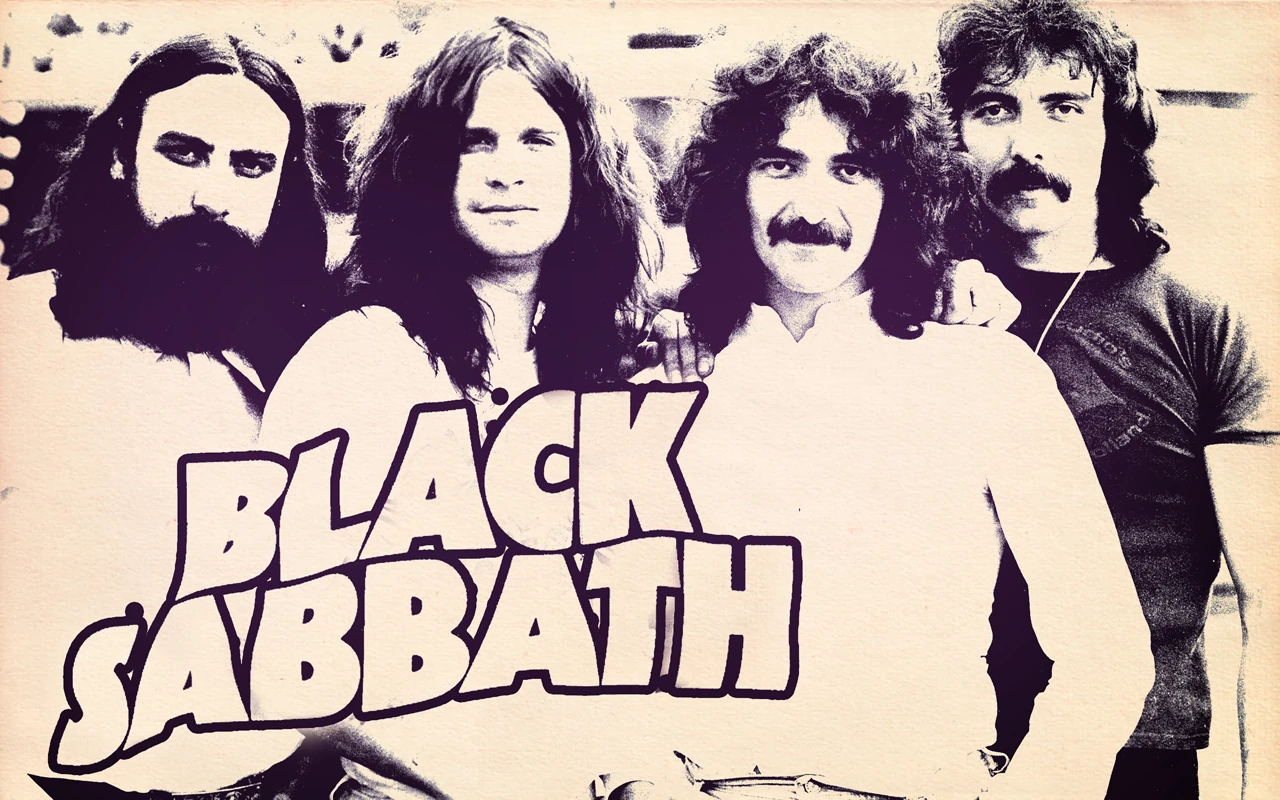
The first heavy metal bands such as Led Zeppelin, Black Sabbath and Deep Purple attracted large audiences, though they were often derided by critics, a status common throughout the history of the genre. During the mid-1970s, Judas Priest helped spur the genre's evolution by discarding much of its blues influence;Motörhead introduced a punk rock sensibility and an increasing emphasis on speed. Beginning in the late 1970s, bands in the New Wave of British Heavy Metal such as Iron Maiden and Saxon followed in a similar vein. Before the end of the decade, heavy metal fans became known as "metalheads" or "headbangers".
During the 1980s, glam metal became a commercial force with groups such as Mötley Crüe and Poison. Underground scenes produced an array of more aggressive styles: thrash metal broke into the mainstream with bands such as Metallica, Megadeth, Slayer, and Anthrax, while other extreme subgenres of metal such as death metal and black metal remain subcultural phenomena. Since the mid-1990s popular styles have further expanded the definition of the genre. These include groove metal (with bands such as Pantera), influenced by extreme metal and hardcore punk, and nu metal (with bands such as Slipknot, Korn and Linkin Park), which often incorporates elements of grunge and hip hop.
CHARACTERISTICS
Heavy metal is traditionally characterized by loud distorted guitars, emphatic rhythms, dense bass-and-drum sound, and vigorous vocals. Metal subgenres variously emphasize, alter, or omit one or more of these attributes. New York Times critic Jon Pareles writes, "In the taxonomy of popular music, heavy metal is a major subspecies of hard-rock—the breed with less syncopation, less blues, more showmanship and more brute force. The typical band lineup includes a drummer, a bassist, a rhythm guitarist, a lead guitarist, and a singer, who may or may not be an instrumentalist.
The lead role of the guitar in heavy metal often collides with the traditional "frontman" or bandleader role of the vocalist, creating a musical tension as the two "contend for dominance" in a spirit of "affectionate rivalry".Heavy metal "demands the subordination of the voice" to the overall sound of the band. Reflecting metal's roots in the 1960s counterculture, an "explicit display of emotion" is required from the vocals as a sign of authenticity.Critic Simon Frithclaims that the metal singer's "tone of voice" is more important than the lyrics. Theelectric guitarand the sonic power that it projects through amplification has historically been the key element in heavy metal.The heavy metal guitar sound comes from a combined use of high volumes and heavy distortion.Guitar solosare "...an essential element of the heavy metal code...that underscores the significance of the guitar" to the genre.Most heavy metal songs "...feature at least one guitar solo",which is "...a primary means through which the heavy metal performer expresses virtuosity. One exception isnu metalbands, which tend to omit guitar solos.With rhythm guitar parts, the "heavy crunch sound in heavy metal...[is created by]palm muting" the strings with the right hand and using distortion.Palm muting creates a tighter, more precise sound and it emphasizes the low end, creating the sound synonymous with thrash metal bands such as Metallica.
Metallica guitarists, James Hetfield and Kirk Hammett
LYRICAL THEMES
According to scholars David Hatch and Stephen Millward, Black Sabbath, and the numerous metal bands that they inspired, have concentrated lyrically "on dark and depressing subject matter to an extent hitherto unprecedented in any form of pop music". They take as an example Sabbath's second album Paranoid (1970), which "included songs dealing with personal trauma—'Paranoid' and 'Fairies Wear Boots' (which described the unsavoury side effects of drug-taking)—as well as those confronting wider issues, such as the self-explanatory 'War Pigs' and 'Hand of Doom.' Deriving from the genre's roots in blues music, sex is another important topic—a thread running from Led Zeppelin's suggestive lyrics to the more explicit references of glam and nu metal bands.
In 1990, Judas Priest was sued in American court by the parents of two young men who had shot themselves five years earlier, allegedly after hearing the subliminal statement "do it" in a Priest song. While the case attracted a great deal of media attention, it was ultimately dismissed.In some predominantly Muslim countries, heavy metal has been officially denounced as a threat to traditional values. In countries such as Morocco, Egypt, Lebanon, and Malaysia, there have been incidents of heavy metal musicians and fans being arrested and incarcerated. In addition, the heavy metal band Iron Maiden were banned from playing in Chile in 1992, after the church denounced them as satanic.
The thematic content of heavy metal has long been a target of criticism. According to Jon Pareles, "Heavy metal's main subject matter is simple and virtually universal. With grunts, moans and subliterary lyrics, it celebrates...a party without limits.... The bulk of the music is stylized and formulaic." Music critics have often deemed metal lyrics juvenile and banal, and others have objected to what they see as advocacy of misogyny and the occult. During the 1980s, the Parents Music Resource Center petitioned the U.S. Congress to regulate the popular music industry due to what the group asserted were objectionable lyrics, particularly those in heavy metal songs.Music critic Robert Christgau called metal "an expressive mode it sometimes seems will be with us for as long as ordinary white boys fear girls, pity themselves, and are permitted to rage against a world they'll never beat".
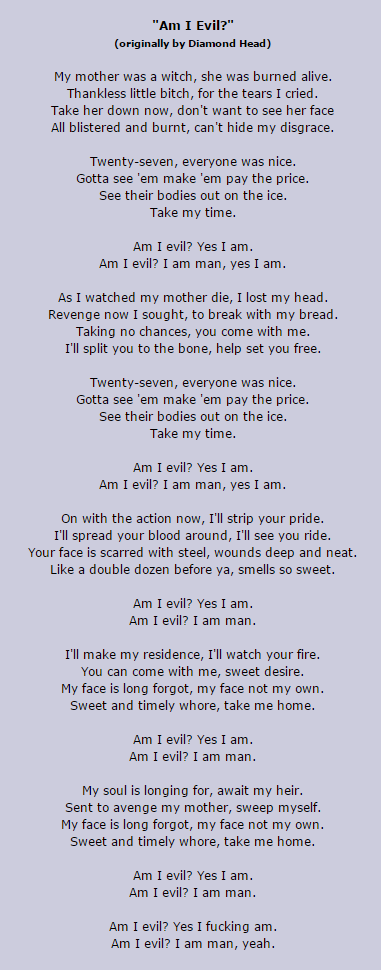
Metallica/Diamond Head 'Am I Evil' Lyrics
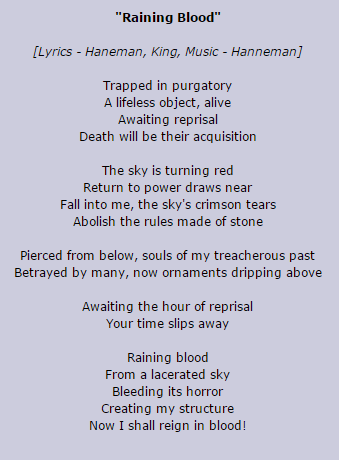
Slayer "Raining Blood" Lyrics
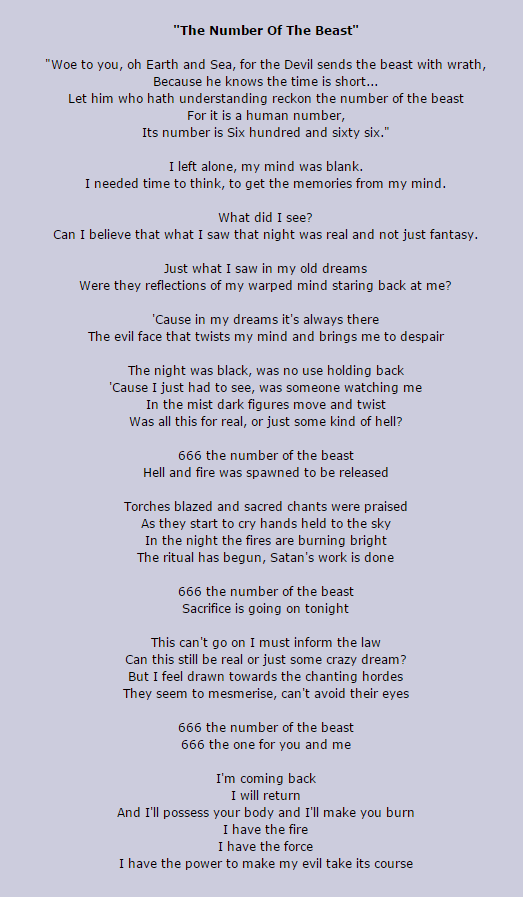
Iron Maiden "The Number Of The Beast" Lyrics
IMAGE AND FASHION
The clothing associated with heavy metal has its roots in the biker, rocker, and leather subcultures. Heavy metal fashion includes elements such as leather jackets; hi-top basketball shoes (more common with old school thrash metalheads); blue or black jeans, camouflage pants, shirts, jackets or shorts, and denim jackets or kutte vests, often adorned with badges, pins and patches. As with the bikers, there is a fascination with Germanic imagery, such as the Iron Cross.
Biker attire acted as an influence on generic heavy metal costume
'Metal Heads' have a fascination with Germanic imagery, such as the Iron Cross
The iron cross appears on Metallica's James Hetfield's signature guitar
Distinct aspects of heavy metal fashion can be credited to various bands, but the band that takes the most credit for revolutionizing the look was Judas Priest, primarily with its singer, Rob Halford. Halford wore a leather costume on stage as early as 1978 to coincide with the promotion for the Killing Machine (Hell Bent for Leather in the USA) album. In a 1998 interview, Halford described the leather subculture as the inspiration for this look. Shortly after appropriating the leather look, Halford started appearing onstage on a roaring motor bike. Soon, the rest of the band followed.
It was not long before other bands appropriated the leather look; Iron Maiden's original singer Paul Di'Anno began wearing leather jackets and studded bracelets, Motörhead innovated with bullet belts, and Saxon introduced spandex. This fashion was particularly popular with followers of the NWOBHM (New Wave of British Heavy Metal) movement in the early 1980s, and sparked a revival for metal in this era.
Motorhead wearing bullet belts
The studded leather look was extended in subsequent variations, to the wearing of combat boots, studded belts and bracelets, bullet belts, spiked gauntlets, etc.
For certain artists and bands, visual imagery plays a large role in heavy metal. In addition to its sound and lyrics, a heavy metal band's "image" is expressed in album sleeve art, logos, stage sets, clothing, and music videos.Down-the-back long hair is the "most crucial distinguishing feature of metal fashion." Originally adopted from the hippie subculture, by the 1980s and 1990s heavy metal hair "symbolised the hate, angst and disenchantment of a generation that seemingly never felt at home", according to journalist Nader Rahman. Long hair gave members of the metal community "the power they needed to rebel against nothing in general."
The classic uniform of heavy metal fans consists of light colored, ripped frayed or torn blue jeans, black T-shirts, boots and black leather or jeans jackets.... T-shirts are generally emblazoned with the logos or other visual representations of favorite metal bands." Metal fans also "appropriated elements from the S&M community (chains, metal studs, skulls, leather and crosses)." In the 1980s, a range of sources, from punk and goth music to horror films, influenced metal fashion.Many metal performers of the 1970s and 1980s used radically shaped and brightly colored instruments to enhance their stage appearance.
Fashion and personal style was especially important for glam metal bands of the era. Performers typically wore long, dyed, hairspray-teased hair (hence the nickname, "hair metal"); makeup such as lipstick and eyeliner; gaudy clothing, including leopard-skin-printed shirts or vests and tight denim, leather, or spandex pants; and accessories such as headbands and jewelry
Van Halen - A glam/hair metal band
Guitars also play a large role within the metal world. Certain styles of guitars are used, while some tend to never make an appearance. For example, most metal guitarists tend to use guitars from companies such as Jackson, ESP, Ibanez, Charvel and Gibson, due to their shapes, which tend to be edgy and suit the genre, such as V and Explorer shaped guitars.
One of James Hetfield's Explorer shaped guitars
Pantera's Dimebag Darrell and his signature guitar
Alternative
rock (also called alternative
music, alt-rock or simply alternative) is a genre of music
that emerged from the independent music underground of the 1980s and became
widely popular by the 1990s. In this instance, the word "alternative"
refers to the genre's distinction from mainstream rock music, expressed
primarily in a distorted guitar sound, subversive and/or transgressive lyrics
and generally a nonchalant, defiant attitude.
Overview
Alternative rock is a broad umbrella term consisting of
music that differs greatly in terms of its sound, its social context, and its
regional roots. By the end of the 1980s magazines, college radio airplay, and word of mouth had increased the prominence and highlighted the
diversity of alternative rock, helping to define a number of distinct styles
(and music scenes) such as gothic rock, jangle pop, noise pop, indie rock, indie pop, grunge, Madchester, industrial rock, and shoegazing. Most of these subgenres had achieved minor
mainstream notice and a few bands representing them, such as Hüsker Dü and R.E.M., had even signed to major labels. But most alternative
bands' commercial success was limited in comparison to other genres of rock and
pop music at the time, and most acts remained signed to independent labels and
received relatively little attention from mainstream radio, television, or
newspapers. With the breakthrough of Nirvana
and the popularity of the grunge and Britpop movements in the 1990s,
alternative rock entered the musical mainstream and many alternative bands became
commercially successful.
By the end of the
decade, alternative rock's mainstream prominence declined due to a number of
events that caused grunge and Britpop to fade and led to the hiatus of the
Lollapalooza festival. Nevertheless, post-grunge remained commercially viable
into the start of the 21st century, with the commercial success of Creed
and Matchbox Twenty and Radiohead's
critical acclaim, and the success of some post-Britpop
groups like Coldplay.
During the late
1990s and early 2000s, several alternative rock bands emerged, including The
Strokes, Franz Ferdinand, Arctic
MonkeysandInterpol, that drew from post-punk and new wave.
Post-punk revival artists such as Modest
Mouse and The Killers had commercial success in the early and mid
2000s.
Characteristics
there is no set
musical style for alternative rock as a whole, although The New York Times in 1989 asserted that the
genre is "guitar music first of all, with guitars that blast out power
chords, pick out chiming riffs, buzz with fuzztone and squeal in feedback."Sounds range from the gloomy soundscapes
of gothic
rock to the jangling guitars of indie pop
to the dirty guitars of grunge to the '60s/'70s revivalism of Britpop. More
often than in other rock-styles since the mainstreaming of rock music during
the 1970s, alternative rock lyrics tend to address topics of social concern,
such as drug use, depression, suicide, and environmentalism
The 1980s
Throughout the
1980s, alternative rock remained mainly an underground phenomenon. While on
occasion a song would become a commercial hit or albums would receive critical
praise in mainstream publications like Rolling
Stone, alternative rock in the 1980s was primarily featured on independent record labels, fanzines, and college
radio stations. Alternative bands built underground followings by touring
constantly and by regularly releasing low-budget albums. In the case of the
United States, new bands would form in the wake of previous bands, which
created an extensive underground circuit in America, filled with different
scenes in various parts of the country. Although American alternative artists of
the 1980s never generated spectacular album sales, they exerted a considerable
influence on later alternative musicians and laid the groundwork for their
success.
In contrast,
British alternative rock was distinguished from that of the United States early
on by a more pop-oriented focus (marked by an equal emphasis on albums and
singles, as well as greater openness to incorporating elements of dance and
club culture) and a lyrical emphasis on specifically British concerns. As a
result, few British alternative bands have achieved commercial success in the
US.
The key British
alternative rock band to emerge during the 1980s was Manchester's The Smiths.
Music journalist Simon Reynolds singled out The Smiths and their American
contemporaries R.E.M. as "the two most important alt-rock bands of the
day", commenting that they "were eighties bands only in the sense of
being against the eighties". Reynolds noted that The Smiths'
"whole stance was predicated on their British audience being a lost generation,
exiles in their own land". The Smiths' embrace of the guitar in an era of
synthesizer-dominated music is viewed as signalling the end of the new wave era
and the advent of alternative rock in the United Kingdom.
1990s
By the start of the 1990s, the
music industry was enticed by alternative rock's commercial possibilities and
major labels actively courted bands includingJane's
Addiction, Dinosaur Jr., Firehose,
and Nirvana.In particular, R.E.M.'s success had become
a blueprint for many alternative bands in the late 1980s and 1990s to follow;
the group had outlasted many of its contemporaries and by the 1990s had become
one of the most popular bands in the world. The breakthrough success of the
band Nirvana led to the widespread popularization of alternative rock in the
1990s. The release of the band's single "Smells Like Teen Spirit"
from its second album Nevermind (1991) "marked the instigation of
the grunge music phenomenon". Due to constant airplay of the song's music
video on MTV, Nevermind was selling 400,000 copies a week by Christmas
1991. With the decline of the
Madchester scene and the unglamorousness of shoegazing, the tide of grunge from
America dominated the British alternative scene and music press in the early
1990s. As a reaction, a flurry of British bands
emerged that wished to "get rid of grunge" and "declare war on
America", taking the public and native music press by storm. Dubbed "Britpop" by the media,
this movement represented by Pulp, Oasis,
Suede,
andBlur
was the British equivalent of the grunge explosion, in that the artists
propelled alternative rock to the top of the charts in their home country. Britpop bands were influenced by and
displayed reverence for British guitar music of the past, particularly
movements and genres such as the British
Invasion, glam rock, and punk rock. In 1995 the Britpop phenomenon culminated
in a rivalry between its two chief groups, Oasis and Blur, symbolized by their
release of competing singles on the same day. Blur won "The Battle of Britpop", but Oasis soon
eclipsed the other band in popularity with its second album, (What's the Story) Morning Glory?
(1995), which went on to become the third
best-selling album in the UK's history.
Decline By the end of the decade,
alternative rock's mainstream prominence declined due to a number of events,
notably the death of Nirvana's Kurt
Cobain in 1994 and Pearl Jam's lawsuit against concert venue promoter Ticketmaster,
which in effect barred the group from playing many major venues around the
United States. In addition to the decline of grunge
bands, Britpop faded as Oasis's third album, Be Here Now (1997), received lacklustre
reviews and Blur began to incorporate influences from American alternative rock. A signifier of alternative rock's
declining popularity was the hiatus of the Lollapalooza festival after an
unsuccessful attempt to find a headliner in 1998. 21st
century and revival During the late 1990s and early
2000s, several alternative rock bands emerged, includingThe
Strokes, Franz Ferdinand, Interpol,
The RaptureandArctic Monkeys that drew primary inspiration
from post-punk and new wave, establishing the post-punk
revival movement. Preceded by the success of bands such as
The Strokes and The White Stripes earlier in the decade, an
influx of new alternative rock bands, including several post-punk revival
artists and others such as Modest Mouse, The
Killers, andYeah Yeah Yeahs, found commercial success in the
early and mid 2000s.
1980's - The Smith's The band consisted of vocalist Morrissey, guitarist Johnny Marr, bassist Andy Rourke and drummer Mike Joyce. Critics have called them the most important alternative rock band to emerge from the British independent music scene of the 1980s. The band's "non-rhythm-and-blues, whiter-than-white fusion of 1960s rock and postpunk was a repudiation of contemporary dance pop" – the style popular in the early 1980s. The band purposely rejected synthesisers and dance music.
1990's - Oasis Oasis have had eight UK number-one singles and eight UK number-one albums, and won fifteen NME Awards, nine Q Awards, four MTV Europe Music Awards and six Brit Awards, including one in 2007 for Outstanding Contribution to Music and one for the Best Album of the Last 30 Years as voted by BBC Radio 2 listeners; they have been nominated for three Grammy Awards. By 2009, the band had sold an estimated 70 million records worldwide. The band were listed in the Guinness World Records book in 2010 for “Longest Top 10 UK Chart Run by a Group” after an unprecedented run of 22 top 10 hits in the UK. Few other bands have ever been able to achieve the same hands-in-the-air anthems that Oasis were so famed for. The ability they had to get fully grown men arm in arm during a gig was a goose-bump inducing spectacle that remains unique to this very day.
1990's - Blur The group consists of singer/keyboardist Damon Albarn, guitarist/singer Graham Coxon, bassist Alex James and drummer Dave Rowntree. Their debut album Leisure (1991) incorporated the sounds of Madchester and shoegazing. Following a stylistic change influenced by English guitar pop groups such as the Kinks, the Beatles and XTC, Blur released Modern Life Is Rubbish (1993), Parklife (1994) and The Great Escape (1995). In the process, the band helped establish the Britpop genre and achieved mass popularity in the UK, aided by a chart battle with rivals Oasis in 1995 dubbed the "Battle of Britpop". Blur are far more than Britpop and the hits. If you include their solo projects, it's hard to come by with a musical style they haven't covered. Their music is usually an inventive mixture of different styles. Every album the band have released is unique and musically different.
2000's - Arctic Monkeys The band have won seven Brit Awards—winning both Best British Group and Best British Album three times, and have been nominated for three Grammy Awards. They also won the Mercury Prize in 2006 for their debut album, in addition to receiving nominations in 2007 and 2013. The band have headlined at the Glastonbury Festival twice, in 2007 and again in 2013. Arctic Monkeys were heralded as one of the first bands to come to public attention via the Internet (through fan-based sites rather than from the band), with commentators suggesting they represented the possibility of a change in the way in which new bands are promoted and marketed The band's music is known to fall under the umbrella of indie rock. A key part of their sound, and one that translates across their whole discography, is lead singer and frontman Alex Turner's intricate and often rapidly delivered lyrics, sung in a distinctive strong Sheffield accent that their music became famed for in their early years. A large part of their iconic British sound is credited to the punk poet John Cooper Clarke who the Arctic Monkeys even borrowed lyrics and the title from in "I Wanna Be Yours". Turner adapted Clarke's method of deliverance mostly in their first album, Whatever People Say I Am That's What I'm Not. Their early albums Whatever People Say I Am That's What I'm Not and Favourite Worst Nightmare were rooted in garage rock and post-punk revival, with Turner's sharp lyrics the focal point. On the first album Alex Turner examined human behaviour in nightclubs and in the culture of the band's hometown, Sheffield. Turner describes "Dancing Shoes" as being about "people always looking to pull when they go out however much they mask it."